It is also a common idiom for C programmers to use words as small bit arrays and access bits of them using bit operators. Array in C can be defined as a method of clubbing multiple entities of similar type into a larger group. These entities or elements can be of int, float, char, or double data type or can be of user-defined data types too like structures. However, in order to be stored together in a single array, all the elements should be of the same data type. The elements are stored from left to right with the left-most index being the 0th index and the rightmost index being the (n-1) index.

Adding 1 to point will now cause it to point to the second field of the array because of the way pointers are handled in C. The system knows that the structure contains three variables and it knows how many memory elements are required to store the complete structure. Therefore if we tell it to add one to the pointer, it will actually add the number of memory elements required to get to the next element of the array.

This is the reason a pointer cannot be used to point to any data type other than the one for which it was defined. An array is a data structure that represents a list of values, called elements. Arrays let you store multiple values in a single variable. This can condense and organize your code, making it more readable and maintainable.

And because arrays are objects with their own methods, they can make working with lists of data much easier. An array is a collection of data items of the same type. Each element of the array can be int, char, float, double, or even a structure. We have seen that a structure allows elements of different data types to be grouped together under a single name.

This structure can then be thought of as a new data type in itself. So, an array can comprise elements of this new data type. An array of structures finds its applications in grouping the records together and provides for fast accessing. As shown, an array data type is named by appending square brackets ([]) to the data type name of the array elements. The NumPy library contains multidimensional array and matrix data structures (you'll find more information about this in later sections).

It providesndarray, a homogeneous n-dimensional array object, with methods to efficiently operate on it. NumPy can be used to perform a wide variety of mathematical operations on arrays. We now have a structure that can be used to store any of four different kinds of data structures. The size of every record will be the size of that record containing the largest union.

In this case part 1 is the largest union because it is composed of three integers, the others being composed of an integer and a character each. The first member of this union would therefore determine the size of all structures of this type. The resulting structure can be used to store any of the four types of data, but it is up to the programmer to keep track of what is stored in each variable of this type. The variable named vehicle was designed into this structure to keep track of the type of vehicle stored here. The four defines at the top of the page were designed to be used as indicators stored in the variable named vehicle.
In lines 25 through 29 of the program, we will assign values to each of the fields of teacher. The first field is the grade field and is handled just like the other structures we have studied because it is not part of the nested structure. Next we wish to assign a value to her age which is part of the nested structure. Notice that the variable names in the strcpy() function are still variable names even though they are made up of several parts each.

We included the string.h header file in line 2 so we could call the string copy function. A structure is a data type in C/C++ that allows a group of related variables to be treated as a single unit instead of separate entities. A structure may contain elements of different data types – int, char, float, double, etc. An array within a structure is a member of the structure and can be accessed just as we access other elements of the structure. The elements can be literal values, such as the strings in the example, variables, or expressions.

If you specify variables, do not place the variable names in quotation marks. The next structure definition contains three fields with the middle field being the previously defined structure which we named person. The variable which has the type of person is named descrip. So the new structure contains two simple variables, grade and a string named lunch, and the structure named descrip. Sincedescrip contains three variables, the new structure actually contains 5 variables. This structure is also given a name alldat, which is another type definition.
Finally, within the main() function, we define an array of 53 variables each with the structure defined by the type alldat, and each with the name student. If that is clear, you will see that we have defined a total of 53 times 5 variables, each of which is capable of storing a value. In Java, the class BitSet creates a bit array that is then manipulated with functions named after bitwise operators familiar to C programmers.
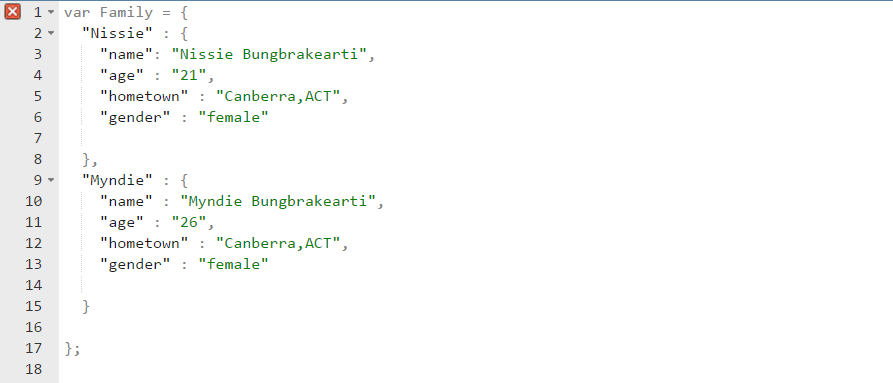
Unlike the bitset in C++, the Java BitSet does not have a "size" state ; a bit can be set or tested at any index. In addition, there is a class EnumSet, which represents a Set of values of an enumerated type internally as a bit vector, as a safer alternative to bit fields. The APL programming language fully supports bit arrays of arbitrary shape and size as a Boolean datatype distinct from integers. All major implementations (Dyalog APL, APL2, APL Next, NARS2000, Gnu APL, etc.) pack the bits densely into whatever size the machine word is.

If you want to learn more about C and Fortran order, you canread more about the internal organization of NumPy arrays here. Essentially, C and Fortran orders have to do with how indices correspond to the order the array is stored in memory. In Fortran, when moving through the elements of a two-dimensional array as it is stored in memory, the firstindex is the most rapidly varying index. As the first index moves to the next row as it changes, the matrix is stored one column at a time.

This is why Fortran is thought of as a Column-major language. In C on the other hand, the last index changes the most rapidly. The matrix is stored by rows, making it a Row-major language. What you do for C or Fortran depends on whether it's more important to preserve the indexing convention or not reorder the data. Your source data often contains arrays with complex data types and nested structures. Examples in this section show how to change element's data type, locate elements within arrays, and find keywords using Athena queries.

Allows columns of a table to be defined as variable-length multidimensional arrays. Arrays of any built-in or user-defined base type, enum type, or composite type can be created. Using a structure you have the ability to define a new type of data considerably more complex than the types we have been using. A structure is a combination of several different previously defined data types, including other structures we have defined. The restored elements occupy the same memory as the corresponding deleted elements. The procedure print_nt prints the nested table variable after initialization and after each DELETE operation.

The type nt_type and procedure print_nt are defined in Example 5-6. The initialization parameters NLS_SORT and NLS_COMP determine the storage order of string indexes of an associative array. If you must change these parameter values during your session, restore their original values before operating on associative arrays indexed by string. You can pass entire composite variables to subprograms as parameters, and you can access internal components of composite variables individually. You can use scalar components wherever you can use scalar variables. PL/SQL lets you define two kinds of composite data types, collection and record.

You can use composite components wherever you can use composite variables of the same type. The examples in this section use ROW as a means to create sample data to work with. When you query tables within Athena, you do not need to create ROW data types, as they are already created from your data source.

When you use CREATE_TABLE, Athena defines a STRUCT in it, populates it with data, and creates the ROW data type for you, for each row in the dataset. The underlying ROW data type consists of named fields of any supported SQL data types. Composite types are called records, structs, or objects in various languages.

A composite type is a collection of named fields, an instance of which can be treated as a single value. In many languages, composite types are the only kind of user-definable type, and they are by far the most commonly used user-defined type in Julia as well. When you declare an array with the ArrayNew function, you specify the number of dimensions. You can create an asymmetrical array or increase the number of dimensions by nesting arrays as array elements.

In ColdFusion, you can create arrays explicitly, by using a function to declare the array and then assigning it data, or implicitly by using an assignment statement. You can create simple or complex, multidimensional arrays. In the program, we first declare 10×10 input and result matrices, along with some loop variables.

Just like our previous programs, we ask the user for the sizes of the two matrices, and check if they are bigger than the 10×10 size. In addition, we check if the number of columns in the first matrix equals the number of rows in the second matrix. If any of these conditions fail, we print an error and exit the program. You might think, why do we need arrays to store multiple data types, when you can just declare normal variables?

Let us take an example — suppose, you have been asked to write a program that takes in the temperature for the last 90 days and perform some processing on that data. Load and display the program named BITFIELD.C for an example of how to define and use a bitfield. In this program, we have a union made up of a single int type variable in line 6 and the structure defined in lines 7 through 12.

The structure is composed of three bitfields namedx, y, and z. The variable named x is only one bit wide, the variable y is two bits wide and adjacent to the variablex, and the variable z is two bits wide and adjacent to y. Zero out matrix rows and columns.Given an m-by-n integer matrix a[][], if ais 0, set row i and column j to 0. First, check whether row 0 has a 0 and whether column 0 has a 0; record this information in two boolean variables.

Next, for each elementa that is 0, set element a and ato 0. In the above example, an integer array of size 6 is declared. A "for loop" is used to input the array elements from the user. Similarly, a "for loop" is used to print these elements in the output. Both times the loop runs from 0 to 5, to iterate over all the array elements.

The first one is to make 100 variables and store the numbers from in those variables separately and then print each digit. The second method is to create an array of size 100 and store the numbers in that array using a loop. These digits can be printed using a single loop in linear complexity. A similar double loop can be coded to do other processing of the data.

Suppose you want to compute the average value of each of the columns. Five variables could be declared for the five columns, but it is cleaner to declare an array with five elements for the five averages. In the following code, the additional array is used first to hold the sums of each column, then a division leads to the average.

A bit array is a mapping from some domain to values in the set . The values can be interpreted as dark/light, absent/present, locked/unlocked, valid/invalid, et cetera. The point is that there are only two possible values, so they can be stored in one bit.

As with other arrays, the access to a single bit can be managed by applying an index to the array. Assuming its size to be n bits, the array can be used to specify a subset of the domain (e.g. ), where a 1-bit indicates the presence and a 0-bit the absence of a number in the set. This set data structure uses about n/w words of space, where w is the number of bits in each machine word.
The procedure use the collection methods FIRST and LAST, described in "Collection Methods". The SQL MULTISET operators combine two nested tables into a single nested table. The elements of the two nested tables must have comparable data types. For information about the MULTISET operators, see Oracle Database SQL Language Reference. To a varray or nested table variable, you can assign the value NULL or a null collection of the same data type.

@Someprogrammerdude Thank you for your time.ChannelNo size is declared as 2 including null terminating character.Am i wrong in understanding? Can you please tell how to store values to array of nested structure.i'll have array size of 37.i.e matrix matrix1, and how to access it. An array is a data structure where multiple values of similar data types can be stored. Double quotes and backslashes embedded in element values will be backslash-escaped. Just like our previous example, we declare the arrays are a and b respectively and have 10 rows and 10 columns to hold the input and result matrix. If it exceeds the size of the array, we print an error and exit.


